Case fields
Case fields let you capture custom, structured data within your cases. Data like ticket IDs, affected systems, or investigation outcomes. These fields extend beyond the built-in case properties like name, status, and priority.
How case fields fit into Cases
Case fields follow a define-once, use-everywhere pattern:
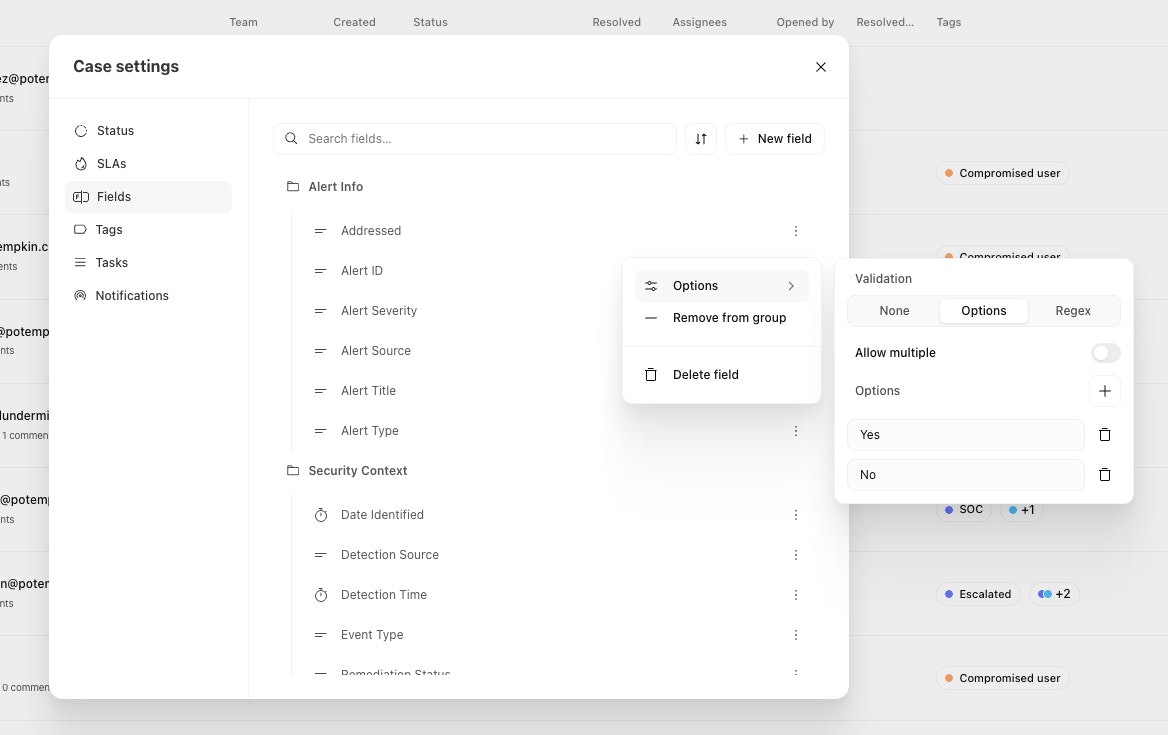
Define fields in your team's case settings – choose a type, set validation rules, and mark fields as sensitive if needed.
Attach fields to cases – add case fields and field groups within a case and case template, or automatically attach fields to cases via story actions.
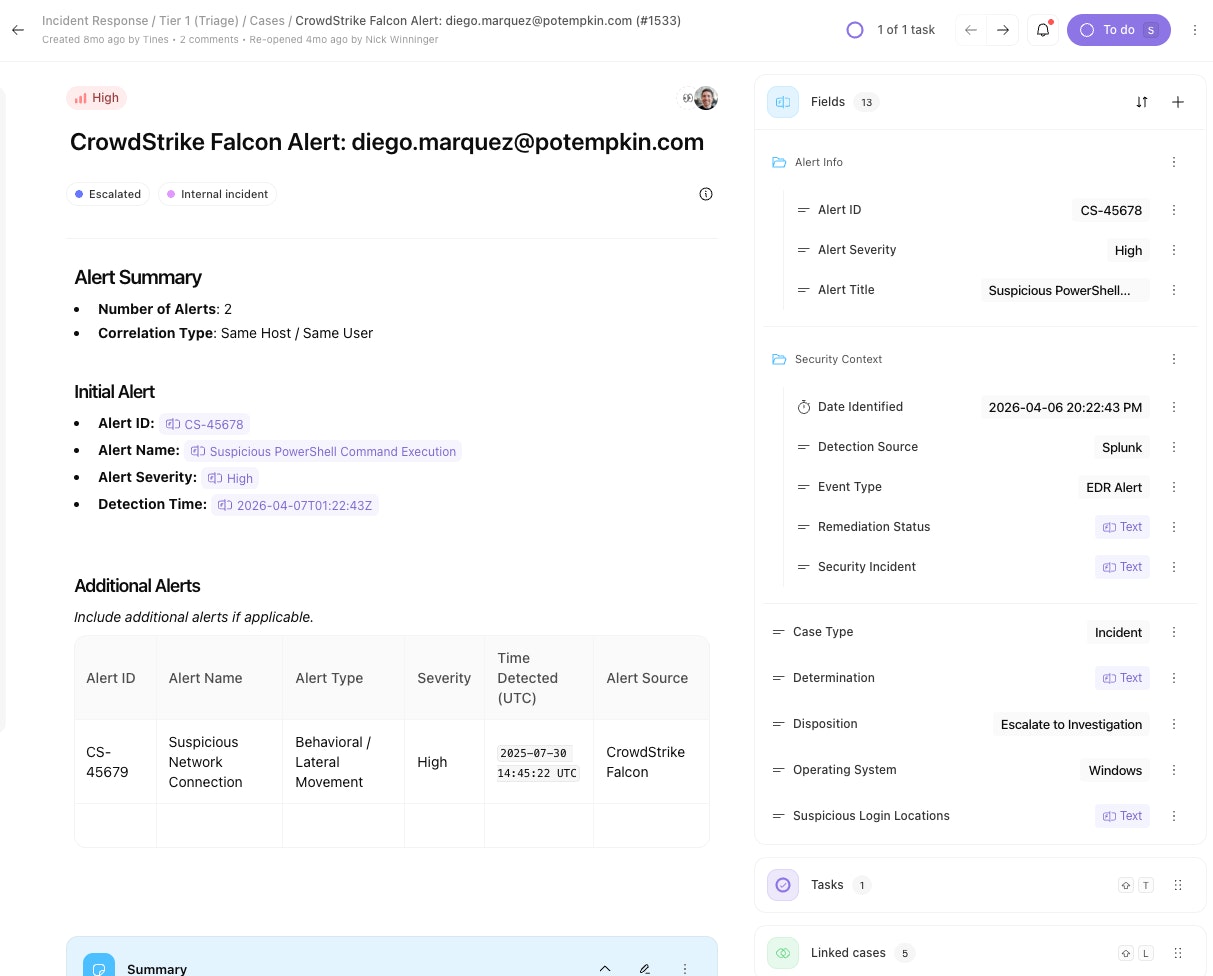
Interact with field values – view and update case fields in the cases sidebar or wherever they are mentioned within a case, via story automation, or dynamically within a page.
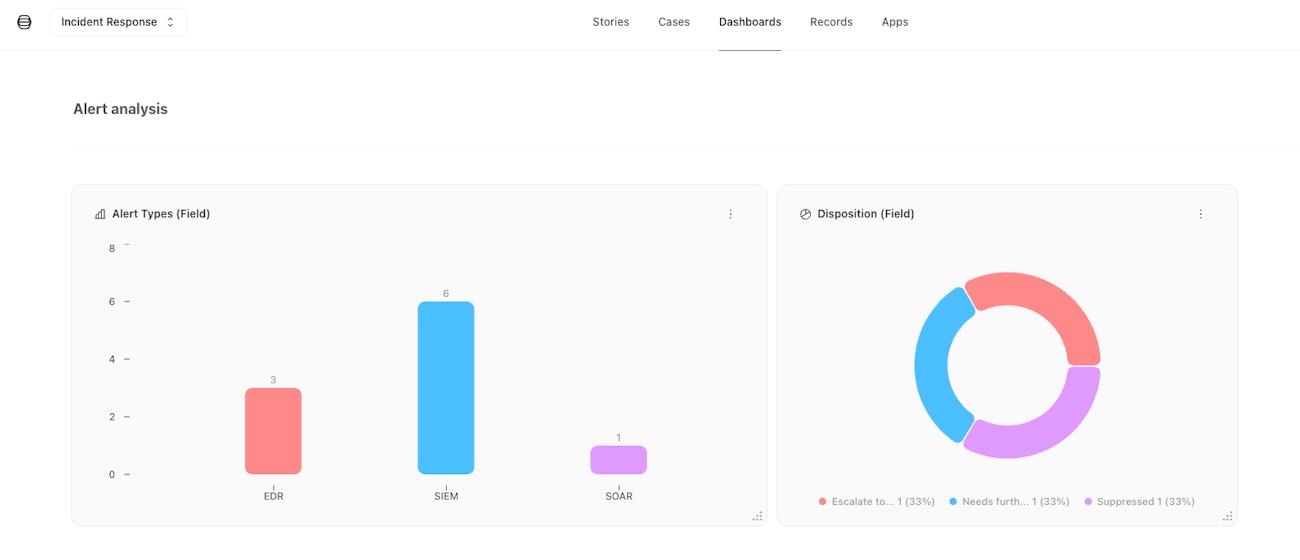
Report on field data – filter the case list and board by field values, or report on case field data within dashboard charts.
Key concepts
Field types – every field has a type (text, number, timestamp, or boolean) chosen at creation. The type determines the input control and cannot be changed later.
Validation – text fields optionally support validation: a fixed list of allowed values or a regex pattern. Other field types do not support validation.
Sensitive fields – fields marked as sensitive are redacted for users without the View sensitive information permission, including in the activity timeline and
@mentions within the case body.Groups – fields can be organized into named, collapsible groups (displayed as folders in the case sidebar) keeping related fields together. Groups are a convenient way to interact with a large number of related fields in cases, search, and dashboards.
@mentions – reference a field's live value directly in case descriptions, notes, and comments by typing@and selecting the field name. Mentions allow you to update the field value inline, continuing through the case uninterrupted.
Define and configure fields
Fields are created and managed in your team's case settings. Fields defined within a team cannot be seen or used by other teams. From here you can:
Add, rename, and delete fields
Configure validation rules (fixed list or regex)
Mark fields as sensitive — see Sensitive case fields
Organize fields into groups
Interact with fields within a story or via API
Once defined, fields can be further leveraged with using the Create case story tile, our story templates, or via the API.
Create case story tile requires that you select a team to proactively load which fields can be added to the case.
When using story templates or the API, they may refer to case fields as
case inputsLoad case field IDs, names, and values quickly in a formula
Use fields within a case
Once defined, fields can be added to individual cases or case templates to capture case-specific data. You can also reference field values inline using @ mentions.
Add, edit, and remove field values
Mention fields in descriptions, notes, and comments
Automate and report on fields
Story actions – set field values automatically when creating or updating cases from a story.
Search and filtering – filter cases by field values, combine conditions with AND/OR logic, and save filtered views.
Dashboards – use case fields as a data source in dashboard charts to visualize trends across cases. See Dashboards
Permissions
Access to case fields is controlled by your roles and permissions.
Creating, updating, and deleting field definitions requires Case field permissions on custom roles, or the Manage cases permission.
Viewing sensitive field values requires the View sensitive information permission.