Threat intelligence? There’s a Tines workflow for that

Manual threat intelligence processes leave your security team drowning in alerts, missing critical threats, and racing against attackers who don't wait - orchestrating and automating threat intelligence is your key to a proactive defense.

The good news? There's a Tines workflow for that.
We’ve calculated that we’ve saved about 10 hours per day with alert correlation and enrichment.
When BCM One receives a malicious email... they can centralize alerts and hunt in Office365 to find threats that wouldn't have been caught before.
It's like having a team of threat analysts just constantly searching 24 hours a day for 100,000 different things all at the same time.

Malware alerts bogging you down?

Lucas from Intercom has a workflow for that.

Handle malware alerts with CrowdStrike, Oomnitza, GitHub, and PagerDuty

Receive CrowdStrike events to webhook, alert Slack channel, look up endpoint metadata in Oomnitza & CrowdStrike, open GitHub issues for tracking. Escalate to PagerDuty for notifying on-call resources if alert requires it.

Community author

Lucas Cantor at Intercom

The toll of manual threat intelligence

Security teams need to prioritize and manage alerts effectively, often using SIEM platforms or other security orchestration tools to correlate and analyze the data. The specific types of alerts a team focuses on can vary depending on the organization's threat landscape, industry, and risk profile, but can include malware detections, network-based threats, user account and authentication alerts, or advanced persistent threats (APTs).

Automating threat intelligence

When it comes to threat intelligence, security teams have many responsibilities, including:

  • Alert enrichment
  • Threat hunting
  • Analyzing threat data
  • Monitoring advisories

Security teams leaverage Tines to automate these tasks and more.

Alert enrichment workflows

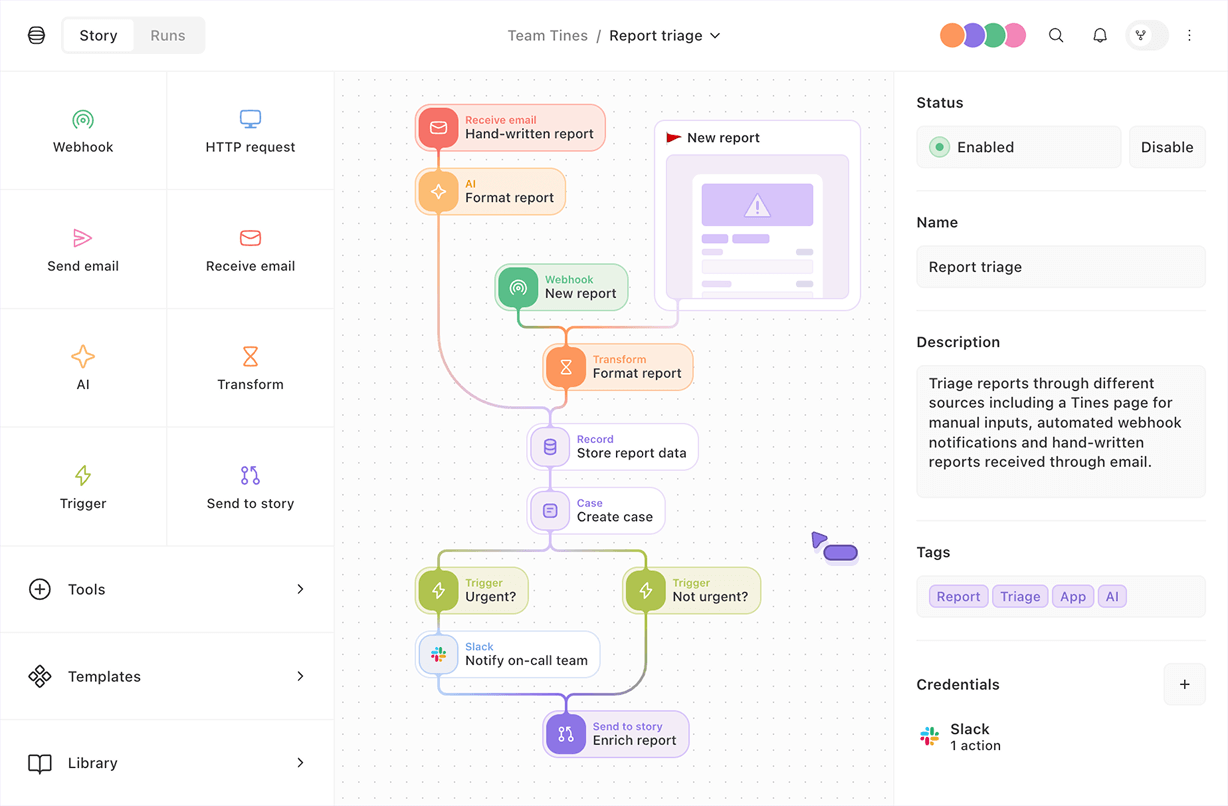
Augment raw security alerts with additional context such as IP reputation, domain analysis, and known threat actor tactics for faster and more accurate threat assessment and response.

Threat hunting workflows

Proactively search through networks and datasets for hidden, advanced threats using indicators of compromise (IoCs), tactics, techniques, and procedures (TTPs) gleaned from various intelligence sources.

IOC analysis workflows

Scrutinize specific artifacts or observable evidence – such as IP addresses, domain names, file hashes, or email addresses to identify, validate, and contextualize potential security threats.

The Tines story library contains 1,000s of pre-built workflows to help you automate your most important tasks securely.

Get Started with Tines Stories Community Edition

Explore Tines Stories’ intelligent workflow functionality for free.

  • 1 team, unlimited viewers
  • 3 flows, 25,000 monthly events

Trusted by
industry leaders

Businesses from global enterprises to national laboratories scale their workflows with Tines.

BEYON CyberCanvaCheggCode42CoinbaseDatabricksDropboxDruvaElasticFortune Brands InnovationsHematoIntercom
JamfKayakMarsMcKessonMyFitnessPalNavanNibOpenTableRedditSnowflakeSophosSprinklr

Not ready to get started?

Learn how other customers have used Tines for threat intelligence

Talk to a product expert

What to expect:

  • Zero-pressure, technical demo of the Tines platform
  • Walkthrough of a relevant use case
  • Overview of plans and pricing 
  • Insight into API and integration capabilities