

SDRs spend most of their day working the lead queue. But for many sales teams, the way that queue is set up can create more chaos than clarity.
At Tines, our SDRs were managing leads and contacts through clunky, disconnected Salesforce dashboards and separate tools. These technology limitations created gaps in visibility, stale data, and compounding inefficiencies that ultimately resulted in missed SLAs (our target time to first contact for a new lead) and lost pipeline.
Using Tines 3B, our AI-native environment for creating apps, agents, and automations in a way that’s governed by the organization, we built a unified lead management platform. It connects our SDRs’ most important tools in one place, simplifying their queue and making it easy for them to focus on action, not admin.
Since introducing the new platform, we’ve seen:
19% decrease in lead response time for high adopters, 8% across the board
~$100K in annual vendor costs avoided by building instead of buying
100% daily adoption among SDRs
greater visibility for sales leadership into SLA attainment and how leads are actioned
Faster follow-up is the lever we're pulling: the sooner a lead is actioned, the better its chance of becoming pipeline. This platform helps us reach every lead while it’s still warm.
Cillian's platform is a game changer for our SDRs, and eventually AEs. It's purpose-built for our sales motion — integrating our whole stack and surfacing everything SDRs need to know at a glance, something that's surprisingly hard to do in a tool like Salesforce.
Conor Flanagan, Senior Manager, Revenue Ops
We've increased our speed to lead and the quality of outreach, driving more opportunities. As a management team, we can quickly add the features we need to collect more data and make better decisions.
David Henry, Senior Manager, Sales Development
It’s one of the biggest improvements we’ve had in the SDR team since I joined. It saves us a considerable amount of time, and the AI scout helps us prioritize leads more effectively. It’s made things so much easier.
Andrew O'Riordan, Sales Development Representative
The problem: Salesforce wasn't built for how SDRs manage leads
Our previous setup was built around Salesforce’s constraints, not around how SDRs actually work.
In Salesforce, SDRs had one view, from which they couldn’t take next steps or get clear insights. Leads and contacts lived in separate reports and dashboards, which made it hard to see the full picture, including what should be in their queue, what was missing, and what needed to be prioritized or actioned next.
Salesforce’s filtering added to the problem. Filters were easy to misconfigure by accident: if a rep had a filter on without realizing it, leads that should have been in their queue were suddenly missing, but it wasn’t obvious why. When this happened, the CommOps team would get tickets requiring us to manually check individual Salesforce fields to see if they matched the filtering on the reports.
Each investigation took 15 minutes, which may not sound like much — but it adds up to hours when you're doing it 5-10 times a week.
Disconnected tools and a lack of unified visibility created gaps in lead tracking, contributing to missed SLAs and potential lost pipeline. It also wasn’t clear when data was stale, so SDRs could waste time on the wrong leads or reach out with outdated information, creating poor experiences for prospects.
The solution: a custom lead management app, built with Tines 3B
With Tines 3B, we built a custom platform that gives SDRs everything they need in one place. It brings lead and contact management, prioritization, and outreach actions into a single hub, with direct integrations to Salesforce, Gong, and LinkedIn so reps no longer need to jump between tools.
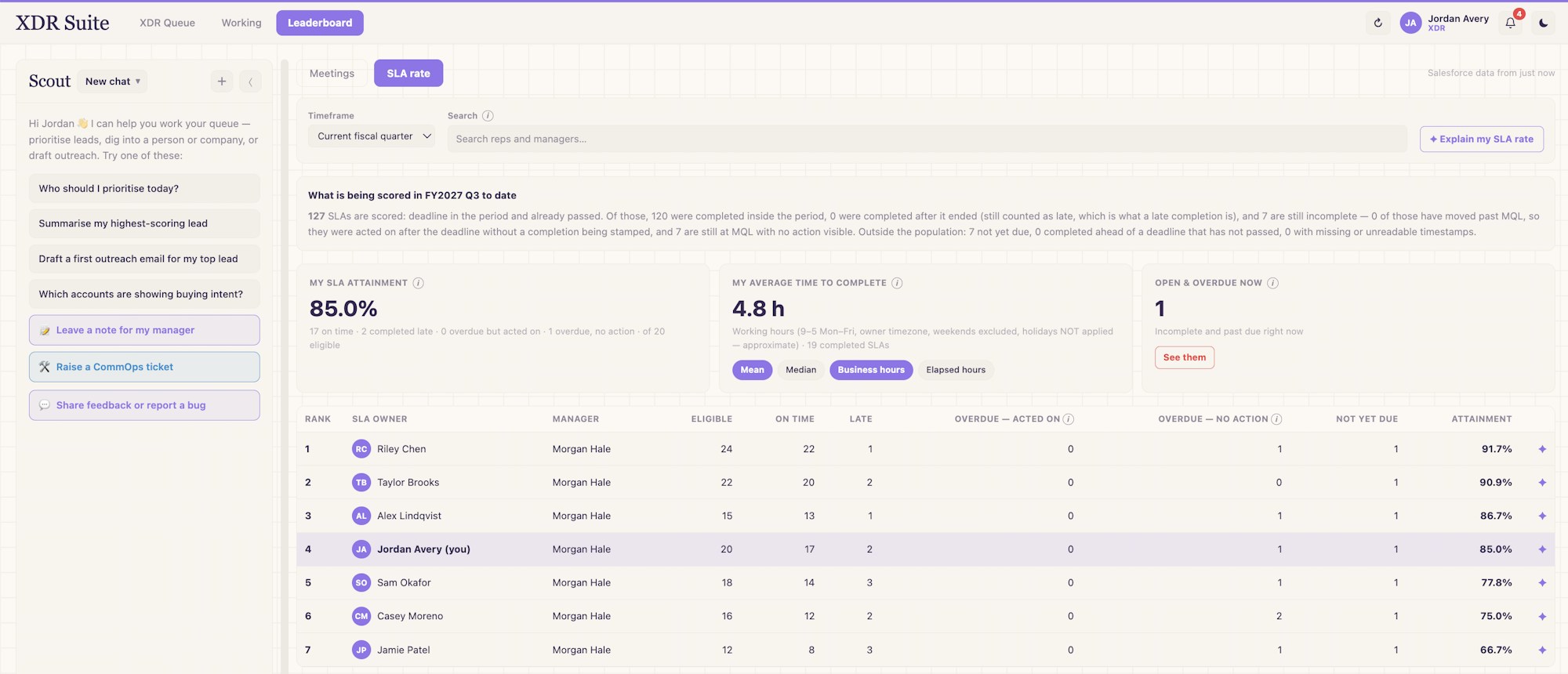
SLA leaderboard - click to expand
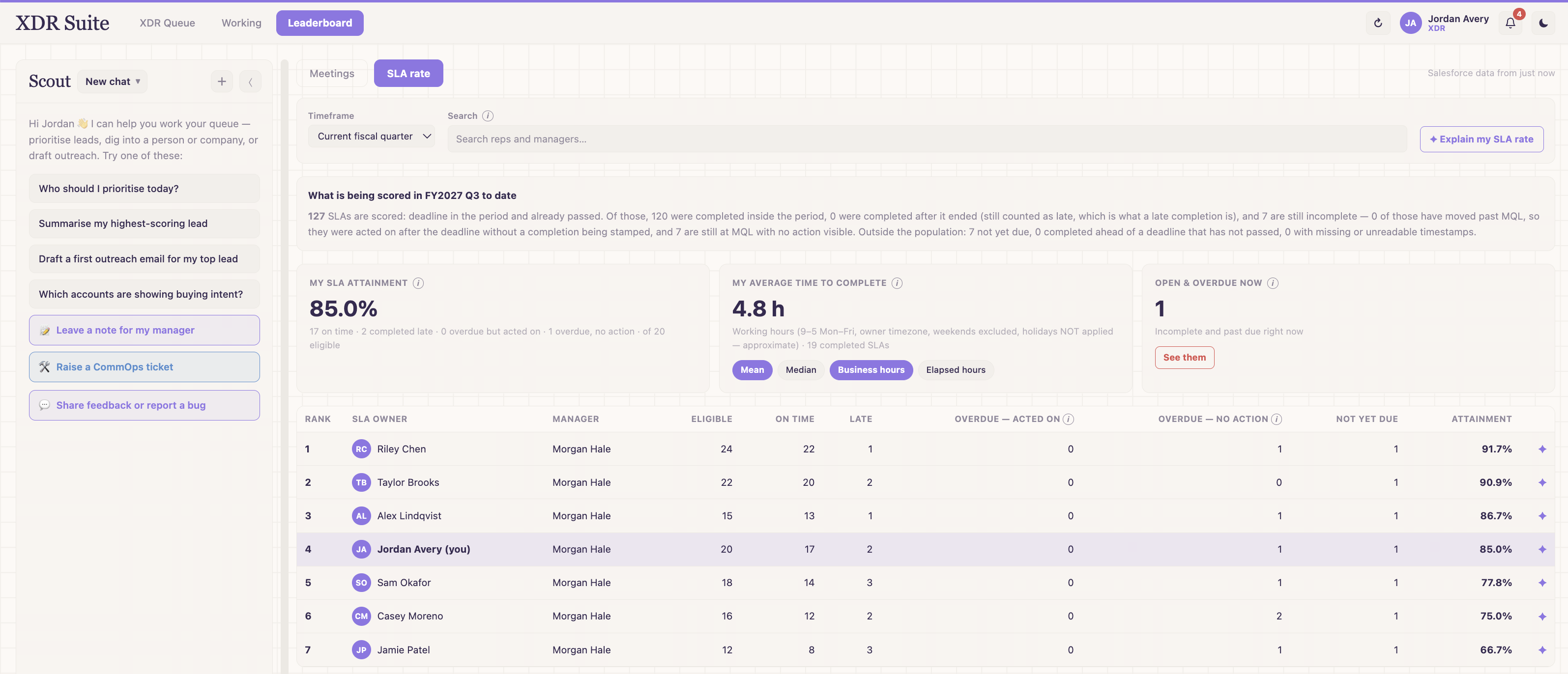
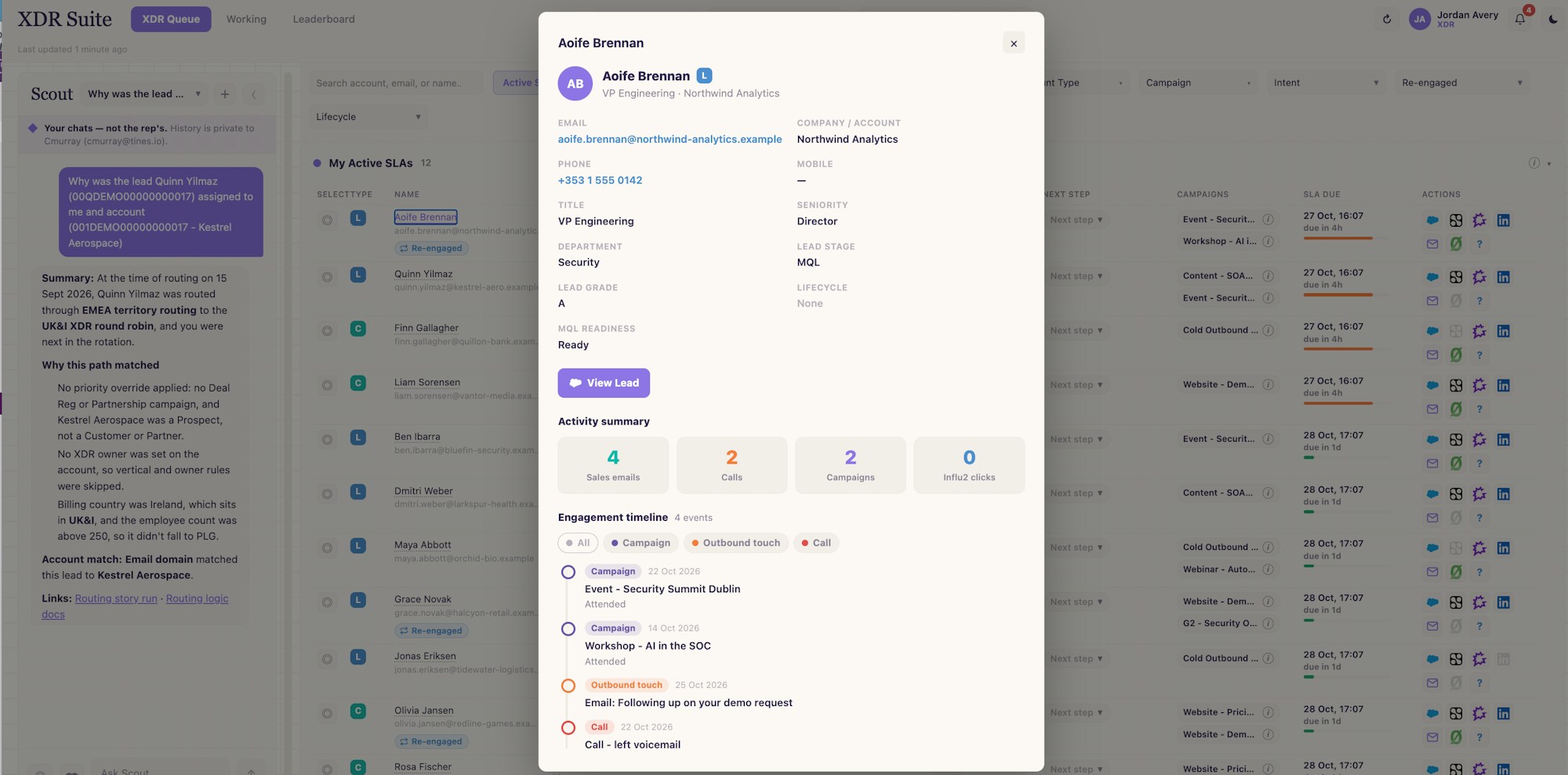
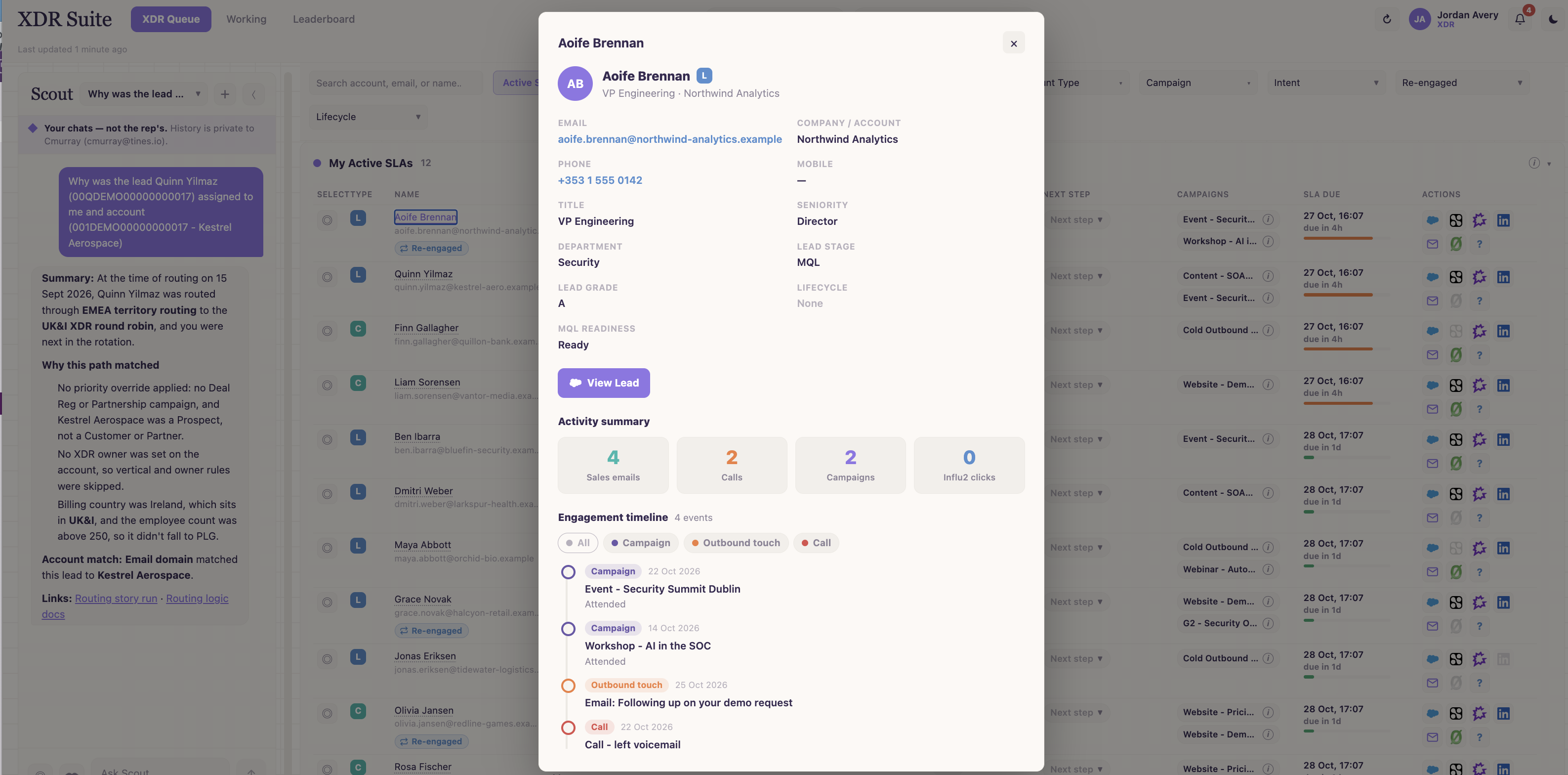
Lead routing queue - click to expand
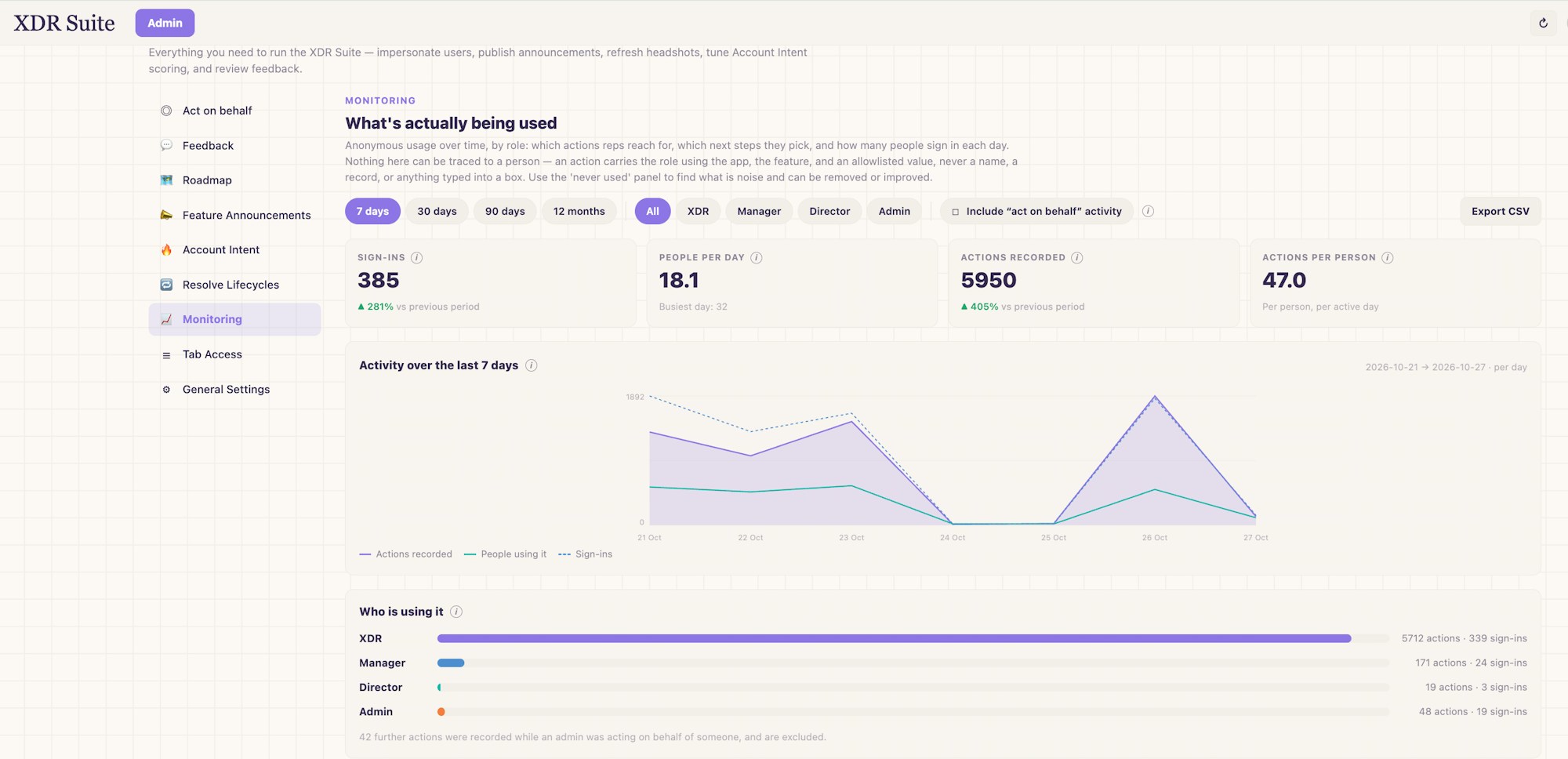
Monitoring, admin view - click to expand
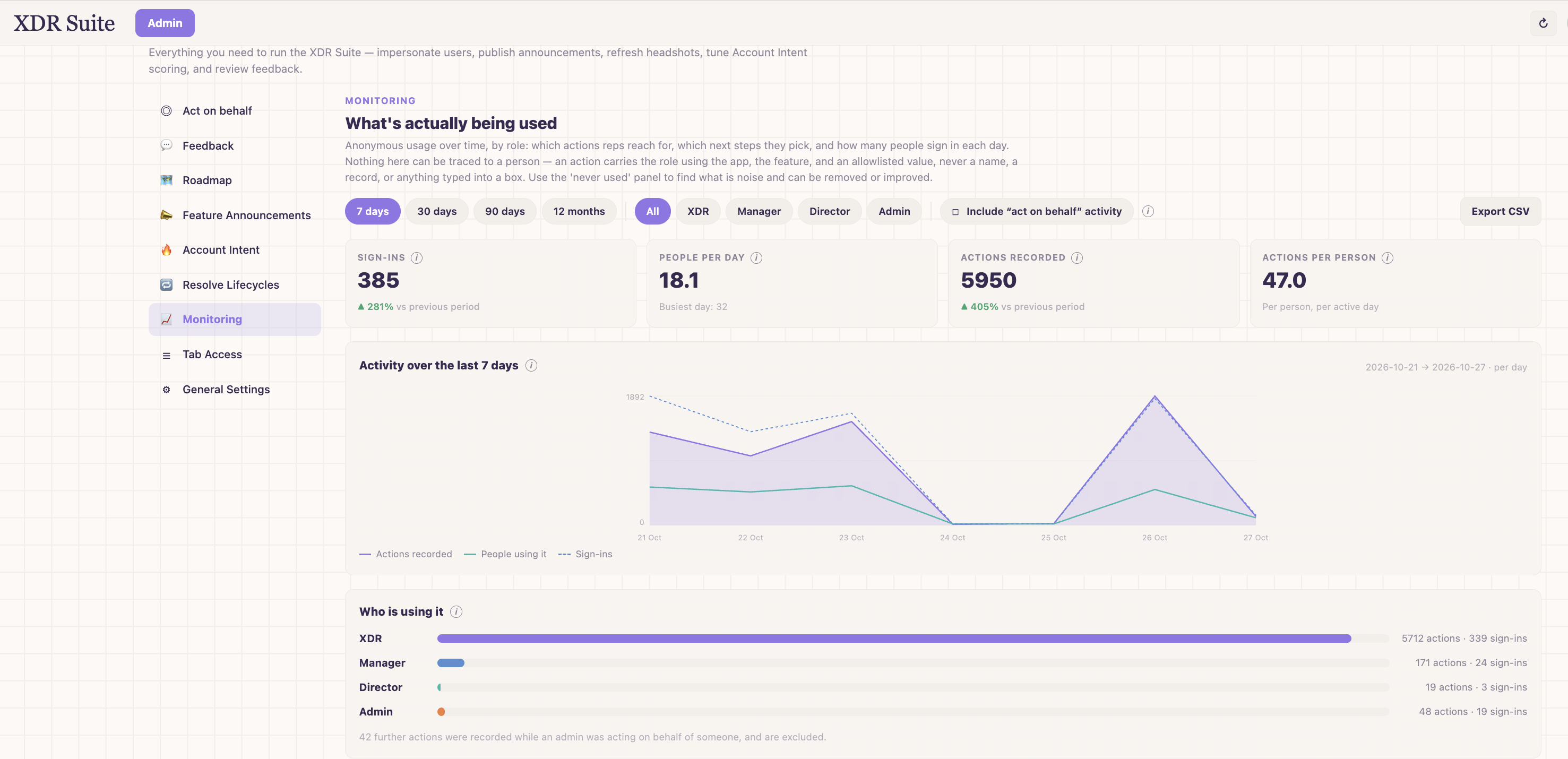
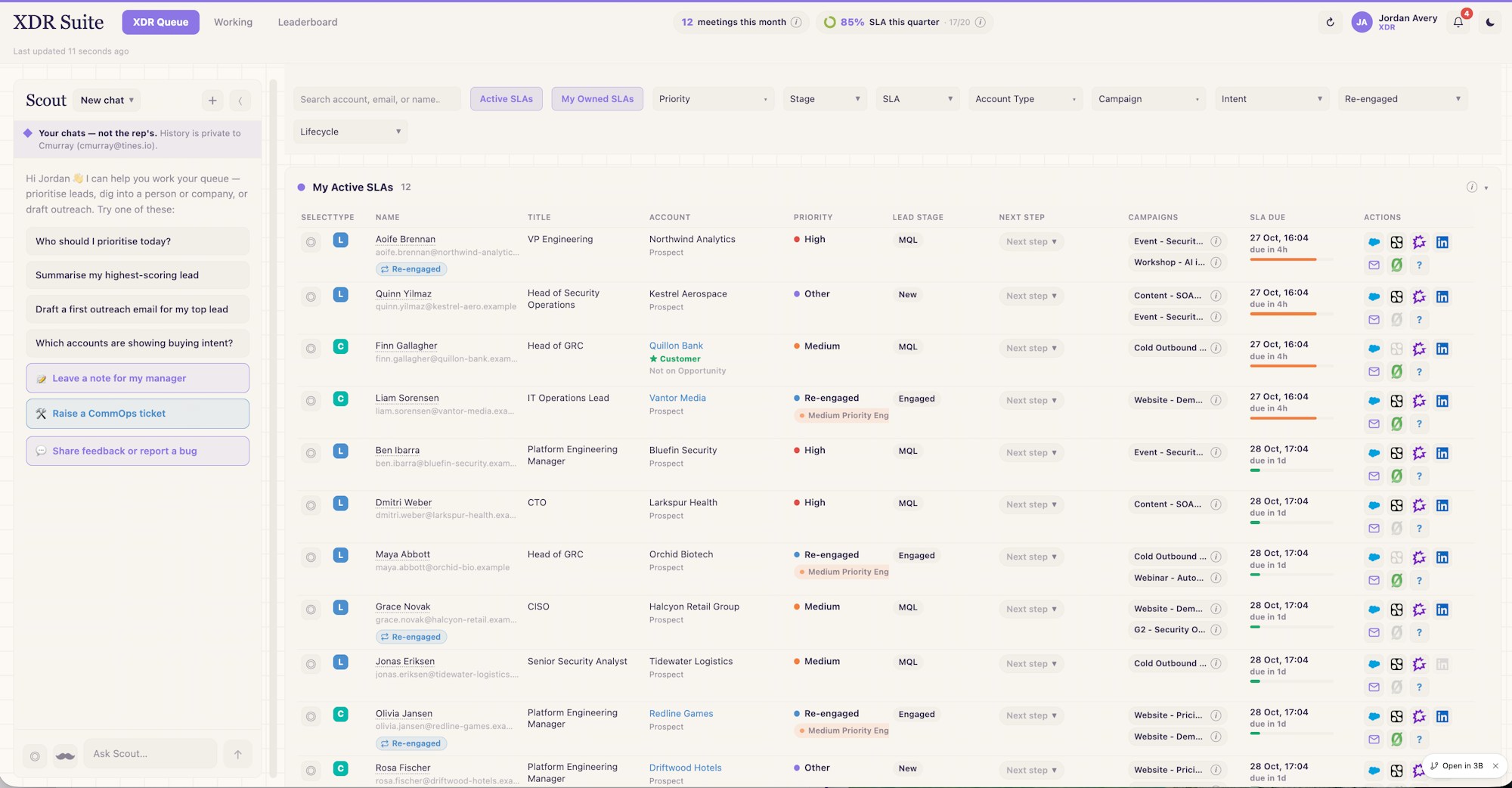
Home queue - click to expand
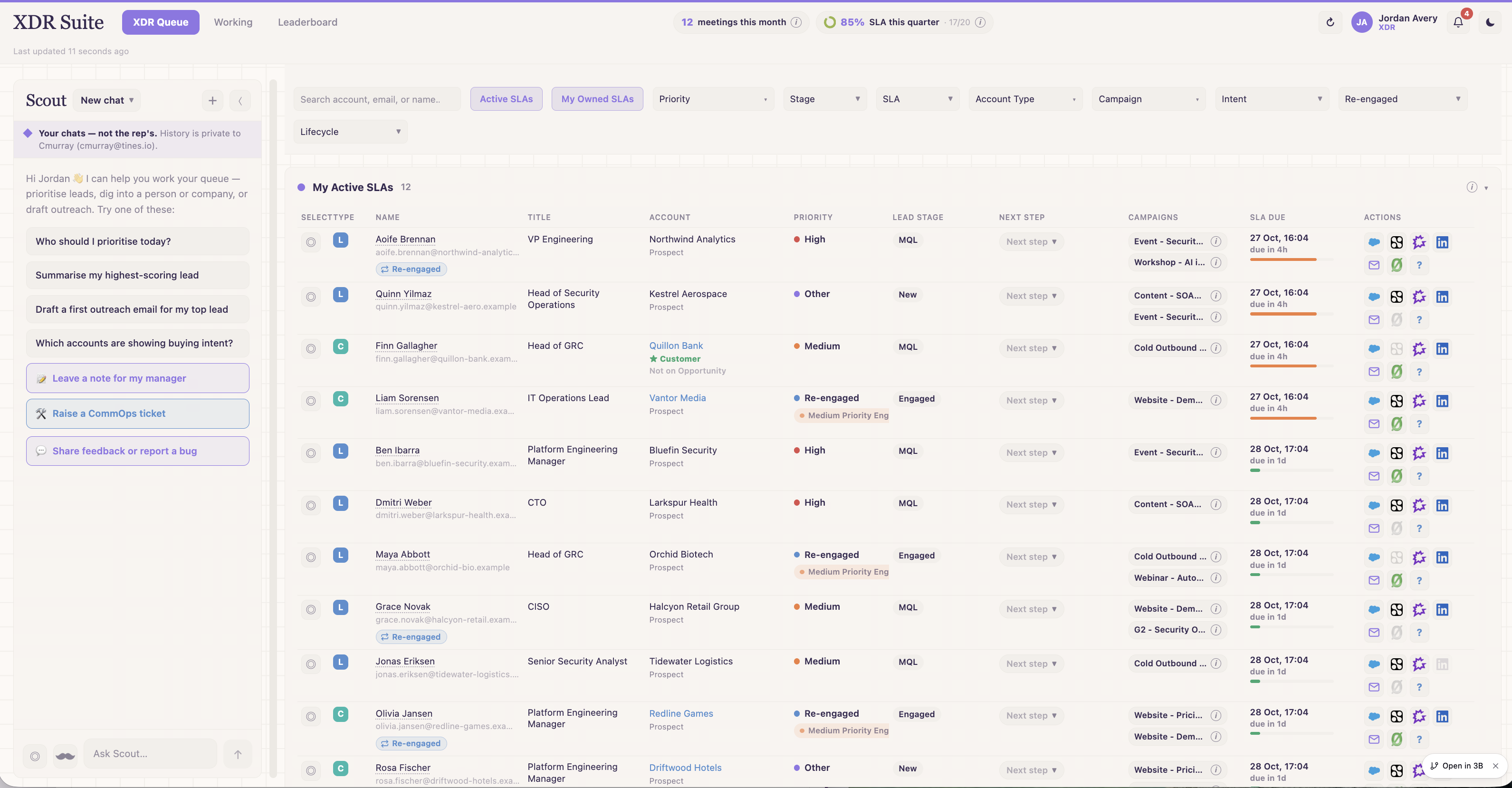
Now, SDRs can take action — like adding a prospect to a Gong flow — with just a few clicks, straight from their queue. If they have questions, they can use the built-in AI-powered agent for lead Q&As based on Salesforce data, or use it to draft a personalized first outreach email using existing information.
We use another AI agent to collect feedback about the platform from SDRs. This lets us understand how it’s working for them, where we can improve, and what they’d like to see next. When we add new features, we post announcements within the platform itself to ensure SDRs stay up to date without adding too much noise.
What makes the platform stand out is that it’s built around our existing sales workflows and requirements.
We had previously evaluated a $100K+ vendor alternative, but our platform fits our needs better, since it's shaped around our exact needs and tech stack, rather than a one-size-fits-all solution.
The impact: adoption, time savings, and a foundation for future growth
Improved rep efficiency
Today, 100% of SDRs use the platform daily, and rep feedback has been really positive. Instead of the messy dashboards and missing leads, they get one, unified view of their queue.
They know exactly what to prioritize and can act on data while it's still fresh. And because they're not switching between tools, they can focus on what matters: connecting with prospects.
Increased SLA attainment and business results
That focus is showing up in the numbers. Since rollout, SLA attainment across the SDR team has improved by 8%. The gains are biggest where adoption is highest: the team using the platform most has seen a 19% increase.
That gap suggests the platform is a key driver of the improvement, though other factors, like team tenure and territory, may also play a part. When reps work their whole queue in one place, fewer leads slip through and more get actioned on time. Faster response leads to more meetings and more pipeline, and we're tracking meetings booked and opportunities created to confirm it.
~$100K in projected cost avoidance
Building internally allowed us to avoid the cost of a comparable third-party solution. Vendor quotes ranged from $50K–$70K per year, with projected costs exceeding $100K per year as we scaled. We built the platform for just $4K in AI token spend, and the ongoing operating costs are almost zero.
The result is a solution tailored to our workflows, without a growing licensing expense — and the flexibility to evolve the platform as our needs change.
Reduced support tickets
Now, RevOps and CommOps teams rarely get tickets about missing leads and queue issues, saving teams time that can be used on other, higher-impact work.
On the rare occasions we do get questions, we can just ask the agent, “Did the lead appear in the queue at this time?” That quickly tells us if the filtering is off or if there’s something wrong in the backend in Salesforce that we need to look into, speeding up time to resolution.
Force multiplier for other RevOps initiatives
The platform started as a fix for the SDR queue problem specifically, but it’s evolved into a broader hub supporting other RevOps projects. Because the reps use it every day, it’s been a major adoption driver for other initiatives.
These include our recent lifecycle rollout — a complete restructure of how we track and manage pipeline within Salesforce — and our expansion rep model, which uses custom filtering to ensure SDRs only see what’s important to them and not historic leads they shouldn’t be working.
Having everything in one place makes it easier to implement, track, and iterate on these initiatives.
For example, as part of the lifecycle rollout, we noticed reporting around meetings booked was poor, so we added a leaderboard to encourage consistent logging.
What’s next?
We’re rolling out leaderboards to track SLA attainment alongside meeting bookings, and we’re planning to expand the hub to AEs for lead handoff. We’re also continuing to optimize the platform based on SDR feedback so we can add more features that improve their workflow. As the data builds, we'll look at how faster lead response translates into pipeline.
We’re currently working on some other RevOps builds in Tines 3B, including a Salesforce lifecycle health-check workflow.
Final thoughts
Tines 3B let us build exactly what we needed: a unified view where SDRs can get to leads quickly and take action in one place. We can connect anything that has an API, so if our GTM tech stack changes, we can adapt the platform without losing our processes and workflows. And I'm continuously updating the roadmap based on SDR feedback.
That means we're not reliant on legacy tools and old ways of working. With Tines 3B, we can customize the platform to our exact systems and needs, and continue to respond to leads faster.
Looking to build your own SDR platform? Check out Cillian's entry in the example gallery. Sign up to try Tines 3B for free, import the complete platform, and connect it to your tools.